Table of Contents
- Why Engineering Culture Isn’t an Office Problem
- The Trap of Replicating Office Culture Remotely
- What Makes Engineering Culture Different in Latam Teams
- The Five Pillars of Distributed Engineering Culture
- Async-First as Cultural Foundation (Not Workaround)
- Rituals That Actually Work
- Trust Without Proximity: The Hardest Challenge
- Onboarding as Critical Cultural Moment
- Signs Your Engineering Culture Is Failing
- How HR Oasis Helps You Build Engineering Culture
- Frequently Asked Questions
Your engineering team has developers in Buenos Aires, Mexico City, and Medellín. Technically they’re functioning. They ship features, close sprints, fix bugs.
But honestly it doesn’t feel like a team.
The daily standups are awkward. Nobody turns on their camera. Developers give the bare minimum update and bounce. Slack is full of messages but empty of real conversation. When you ask “any questions?” in meetings, crickets.
There’s no camaraderie, no energy, no sense of team that made working together feel good when everyone was in the office. What you have now feels transactional. A group of contractors completing tickets, not an engineering team building something together.
And here’s the problem nobody tells you when you start hiring remote in Latam. The technical part is easy. Finding good developers, setting them up with laptops and access, assigning work. That’s logistics.
The hard part is building engineering culture when your team will never be in the same room. Culture that makes people want to stay, that makes them feel part of something, that gets them collaborating genuinely instead of just completing what was assigned.
After working with dozens of companies building distributed teams across Latin America, I can tell you this: culture doesn’t happen on its own in remote teams. You have to design it deliberately, just like you design your architecture or development process.
Here’s everything we learned about building real engineering culture in distributed teams, especially when your team includes talent from Argentina, Mexico, Colombia, Brazil, and the rest of Latam.
Why Culture Isn’t an Office Problem
Let’s start by killing a myth. Engineering Culture isn’t ping pong tables and free lunch. It’s not about where people work.
Culture is how your team communicates when something breaks. It’s whether people feel safe admitting they’re stuck on a problem. It’s whether someone helps a teammate without being asked. It’s whether people feel valued or feel like they don’t matter.
In an office, a lot of this happens through proximity. You see someone frustrated with something, you walk over and ask if you can help. You overhear an interesting technical conversation and join in. You grab coffee with someone and end up talking architecture for 20 minutes without having planned it.
That ambient communication builds engineering culture without anyone having to think about it much.
In remote work, you don’t have that. No shoulder taps, no hallway conversations, no spontaneous whiteboard sessions. Everything has to be intentional.
And here’s the crucial difference between remote teams that work and remote teams that feel like a call center. The ones that work understand remote engineering culture is a system you have to design. The ones that fail expect culture to emerge naturally like it did in the office.
According to research on remote team collaboration from Buffer’s State of Remote Work, 98 percent of remote workers want to continue working remotely at least some of the time. But companies with formal remote-first policies report 29 percent higher employee satisfaction and 23 percent lower voluntary turnover compared to companies that just let people work from home without changing anything else.
The difference is intentional design versus hoping it works out.
The Trap of Replicating Office Culture Remotely
The mistake I see constantly is companies trying to recreate office culture on Zoom.
They translate every meeting to video call. They do daily standups where everyone turns on camera and reports what they did yesterday like robots. They schedule “virtual happy hours” where people feel obligated to stay drinking beer in front of their laptop after work hours.
It doesn’t work because you’re trying to force office behaviors into a different medium. It’s like trying to use a screwdriver as a hammer. Technically you can, but you’ll end up frustrated and with screws everywhere.
Remote culture isn’t office culture with cameras. It’s something different that needs its own patterns.
Instead of trying to replicate spontaneous hallway conversations, you need to create structured spaces for informal communication. Instead of expecting people to absorb context by proximity, you need documentation that makes context accessible. Instead of relying on physical presence to build trust, you need transparency and consistent communication.
The specific trap with Latam teams is assuming that because they’re in similar timezones and speak decent English, you can manage them exactly like you managed your US office team.
You can’t. Cultural expectations are different. Communication styles are different. What builds trust is different.
A developer in Argentina might value direct feedback and intellectual debate more than a US developer who prefers diplomatic phrasing. An engineer in Mexico might expect more personal relationship-building before feeling comfortable being fully candid. A team member in Colombia probably places more value on team harmony than being the squeaky wheel that gets attention.
If you treat everyone the same without understanding these differences, you’ll build culture that works well for some and alienates others. And that creates resentment and turnover.
What Makes Culture Different in Latam Teams
Working with engineering teams across Latin America has specific dynamics that matter for culture building.
First, relationship-first culture. In general, Latin American professionals value personal connections and trust-building more than typical US business culture which is more transactional.
This means time invested in genuinely getting to know your team members, not just as engineers but as people, isn’t wasted time. It’s foundation-building. A developer in Buenos Aires who feels personally connected to their manager and teammates is going to be more engaged, communicate problems more openly, and stay longer than someone who just feels like another ticket-completer.
According to cultural research from SHRM on workplace engagement, companies that prioritize relationship-building and personal connection in distributed teams see significantly higher retention rates and employee satisfaction, particularly in regions where relationship-first culture is the norm.
Second, communication style differences by country. This isn’t about stereotypes, it’s about tendencies that help you navigate interactions better.
Mexican professionals often align closely with US communication norms, direct and results-oriented. Argentinian teams typically value debate and intellectual challenge, don’t be surprised if there’s pushback in discussions. Colombian and Peruvian engineers might initially be more formal or prefer indirect communication on certain topics. Brazilian culture operates in Portuguese with different professional patterns entirely.
Treating Latin America as a monolith causes problems. Your approach to feedback, decision-making, and conflict resolution might need to adapt based on where your team members are located.
Third, timezone advantages with caveats. Most of Latin America is 0 to 3 hours difference from US Eastern. This is a huge advantage over Eastern Europe (6 to 8 hours) or Asia (10 to 16 hours).
But timezone overlap doesn’t automatically create culture. You still need structure on when to use that overlap time and for what.
Fourth, career growth expectations differ. In some Latin American markets, clear progression paths and formal recognition of seniority matter more. In others, interesting technical work and autonomy matter more than titles.
Understanding what drives your specific team members helps you create culture that rewards people in ways they actually value.
The Five Pillars of Distributed Culture
After seeing dozens of distributed engineering teams succeed and fail, culture comes down to five foundational pillars that need to be solidly in place.
Pillar One: Radical Clarity on Expectations
In office settings, expectations get clarified through ambient communication. Somebody asks “should I do X or Y?” and gets an immediate answer. Remote teams don’t have that luxury.
Clear expectations mean everyone knows what deliverables are expected from their role, how success is measured in their work, when it’s okay to interrupt someone and when it’s not, what decisions they can make autonomously, and how and when to communicate blockers.
This sounds basic but the number of distributed teams that operate without these clarities is staggering. People spin because they don’t know if they’re doing the right thing. Managers get frustrated because people aren’t taking initiative when in reality people don’t know what initiative is expected.
Document your expectations. Make them visible. Update them when they change.
Pillar Two: Deliberate Communication Architecture
You can’t just say “we use Slack and Zoom” and call it done. You need to define exactly how and when to use each communication channel.
This includes defaulting to async for most things, reserving sync time for discussions that genuinely need real-time interaction, establishing response time expectations (Slack within a day, email within 2 days, etc.), and creating a team communication charter that codifies norms.
The best distributed teams I’ve seen have written communication guidelines that everyone can reference. It’s not in someone’s head, it’s documented.
Pillar Three: Documentation as Infrastructure
In offices, knowledge lives in people’s heads and gets transferred through conversations. Remote teams can’t afford that.
Documentation needs to be first-class infrastructure, not an afterthought. This means onboarding docs that let new hires get set up without constant hand-holding, architecture decision records that explain why things are designed a certain way, process documentation for common workflows, and runbooks for operations.
Assign rotating documentation duty. Each sprint, one engineer is responsible for updating docs that are out of date, filling gaps they notice, adding anything that was only in someone’s head.
This turns documentation from a solo chore into a team practice.
Pillar Four: Trust Building Without Proximity
Trust is harder to build at a distance, and it’s worth understanding why.
In an office, lots of trust-building happens through ambient signals. You see someone arrive early, stay late, help a colleague, handle a difficult conversation calmly. Those observations build confidence in that person’s competence and character.
Remote, you don’t have those signals. You have to build trust differently.
This means over-communicating context and reasoning behind decisions, making your work visible without being asked, following through consistently on commitments, being transparent when you’re blocked or made a mistake, and giving credit publicly while providing feedback privately.
Trust also requires that managers trust their engineers to do work without surveillance. If you can’t trust a developer without tracking their keyboard activity, you hired the wrong person.
Pillar Five: Deliberate Belonging and Connection
Without those casual office interactions, people feel isolated fast. You have to create structured opportunities for connection.
This includes regular team calls that mix work and personal check-ins, Slack channels dedicated to interests outside work, virtual coffee chats that are scheduled (not optional guilt trips), recognition systems that surface good work publicly, and celebration of milestones in a way that people actually feel.
One of the best investments some companies make is hiring someone specifically responsible for remote experience and culture. That would have sounded absurd in 2019. In 2026, it’s a competitive differentiator.
Async-First as Cultural Foundation (Not Workaround)
The biggest mistake in remote engineering management is treating async as a lesser version of real-time communication.
Async-first means the default mode of communication doesn’t require both parties to be available at the same time. Updates are written. Decisions are documented. Status is visible without a meeting.
Synchronous time (calls, standups, reviews) is reserved for things that genuinely need real-time discussion.
This shift matters especially for teams in Latin America working with US clients or collaborators. A developer in São Paulo shouldn’t reasonably be expected to attend an 11 PM call every day because a client in San Francisco keeps business hours.
Async communication structures remove this dependency without removing alignment.
When you make writing the default, you shift from a pull model (someone asks, someone answers) to a push model (important information is documented and available). That shift is what makes remote teams actually work.
Documentation-as-infrastructure exists because written knowledge compounds. Trust-building at a distance exists because when people can’t see each other working, shared written context is what replaces ambient presence.
Practical async patterns that work include using Loom or async video for design feedback instead of scheduling meetings, writing RFCs (Request for Comments) for technical decisions instead of back-and-forth Slack threads, maintaining visible sprint boards where anyone can see what’s happening, and posting daily updates in a designated channel instead of everyone attending standup.
The result isn’t less communication. It’s better, more thoughtful communication that respects people’s time and creates a permanent record.
Rituals That Actually Work
Culture needs rituals. Not because rituals are inherently valuable, but because they create predictable moments where certain behaviors happen.
Here are rituals that actually move the needle on distributed team culture.
Monthly All-Hands (1 hour, cameras on): Mix of company updates, team wins, technical deep-dives. Rotate who presents. Make it genuinely worth attending, not just reading slides that could’ve been an email.
Weekly Team Demo (30 mins): Each engineer shows something they shipped or learned that week. This builds visibility into each other’s work and creates natural teaching moments.
Async Friday Updates: Instead of a synchronous standup Friday afternoon, everyone posts a written update about what shipped, what they learned, what they’re proud of. Creates end-of-week reflection without requiring a meeting.
Quarterly Virtual Offsites (half day): Mix of strategic planning, architecture discussions, and fun activities. This is where you invest in relationship building more deeply.
Bi-weekly 1-on-1s (Manager + Each Engineer): Non-negotiable. This is the primary space for career conversations, feedback, and personal connection. Don’t cancel these because there’s “nothing to discuss.”
New Hire Welcome Ritual: When someone joins, announce them properly. Have them introduce themselves. Assign a buddy for the first month. Make joining feel like an event, not just another Slack account.
The rituals that fail are ones that feel obligatory without clear value. Virtual happy hour at 6 PM where people awkwardly drink beer on camera while trying to think of things to say? Skip it. Replace with opt-in interest channels where people connect around actual shared interests.
Trust Without Proximity: The Hardest Challenge
Let’s be real about what makes building trust hard in distributed teams.
You can’t see people working. You can’t observe their process. You can’t read body language in most interactions. You can’t have those spontaneous moments that build personal connection.
All you have is their output, their communication, and whether they do what they said they’d do.
This creates temptation to over-monitor. Time tracking software, activity monitoring, screenshot tools. All that garbage that destroys trust instead of building it.
If you hired good people, trust them to do the work. Measure outcomes, not activity.
Trust builds through consistency (do what you say you’ll do, repeatedly), transparency (share context, reasoning, and challenges openly), vulnerability (admit mistakes, ask for help, show you’re human), recognition (acknowledge good work publicly and specifically), and support (actually help when someone’s blocked, don’t just say “let me know if you need anything”).
For managers specifically, trust requires letting go of visibility into every moment. You won’t see your engineer struggling for 3 hours with a tough problem. You won’t know exactly when they started or stopped working.
What you will see is if they deliver on commitments, if they communicate blockers early, if they help teammates, if quality is consistent.
That’s enough. If it’s not enough, you have a hiring problem, not a trust problem.
Onboarding as Critical Cultural Moment
Onboarding is when cultural patterns get established. A new hire’s first 2 weeks set expectations for how things work here.
If onboarding is chaotic, poorly documented, and requires the new person to constantly interrupt people for basic information, that’s the culture they’ll absorb. “Everything is messy, figure it out yourself, bother people until someone helps.”
If onboarding is structured, well-documented, with clear milestones and check-ins, that communicates a different culture. “We value clarity, we invest in helping you succeed, we’ve thought about your experience.”
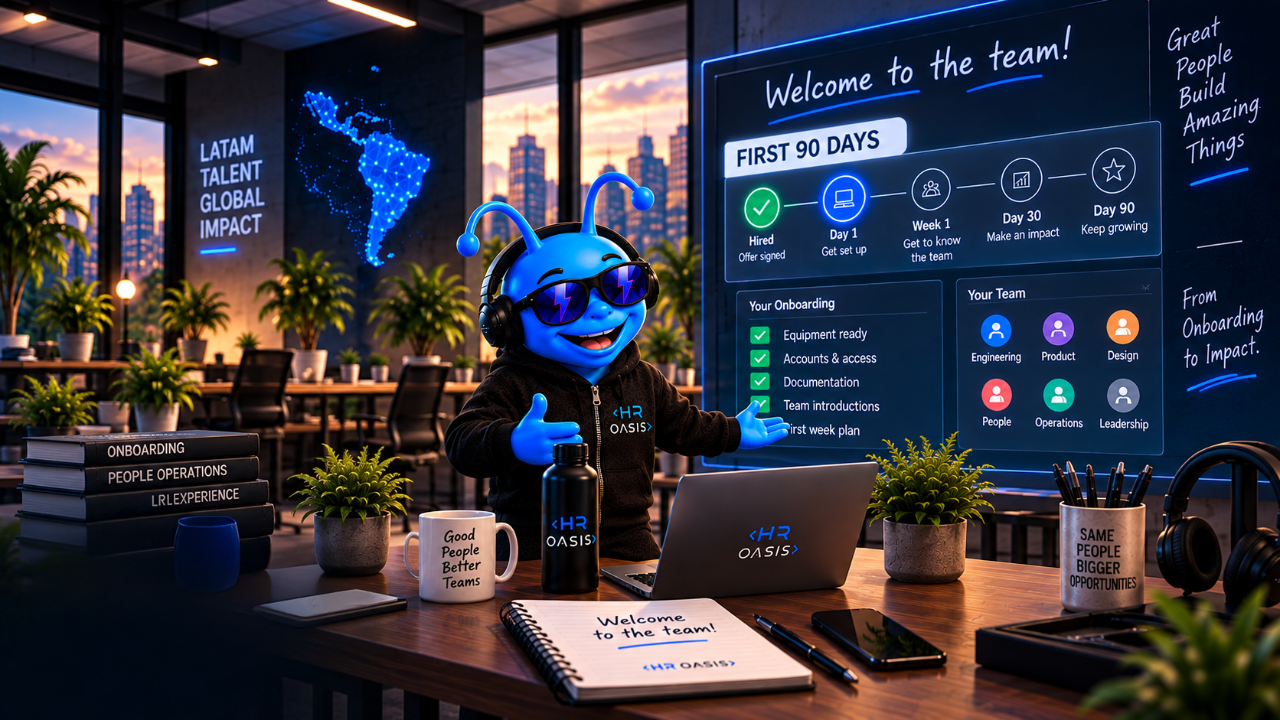
Strong remote onboarding includes pre-day-one preparation (send welcome package with laptop, swag, personal note from team, invite to Slack and relevant channels, share 30-60-90 day plan, assign onboarding buddy), week one structure (structured schedule of intro meetings, environment setup documentation that actually works, first small PR merged by end of week, daily check-ins with manager and buddy), weeks two through four (gradually increasing ownership of real work, continued pairing with team members, explicit feedback on how they’re doing, social connection opportunities), and first 90 days (regular milestone check-ins, progressive challenge increase, career conversation around month two, feedback loop on onboarding experience).
According to research on distributed team effectiveness from Stack Overflow, structured onboarding can boost new-hire retention by 82 percent and increase productivity by over 70 percent. Without it, new developers often struggle to add value during their first 3 months.
The companies with best retention make onboarding feel like you’re joining something special, not just getting access to Jira.
Signs Your Culture Is Failing
Culture problems don’t announce themselves. They show up as symptoms that seem unrelated.
Here are early warning signals. People stop turning on cameras, which is the first sign of disengagement. They’re there physically but mentally checked out. Slack activity drops as channels that used to be active go quiet. People respond to direct questions but don’t initiate conversation.
Nobody asks questions in meetings. You ask “any questions?” and get silence. Not because everything is clear, but because people don’t feel safe asking. Knowledge silos form where certain people become single points of failure for certain areas. Nobody else knows how stuff works.
Turnover happens at 12 to 18 months. People leave right when they should be hitting their stride. Classic culture problem.
“Us vs Them” language emerges. Office team vs remote team. US vs Latam. Engineering vs product. Divisions that shouldn’t exist. Communication becomes passive aggressive as people don’t address issues directly. Lots of subtext, sarcasm, or silence instead of honest conversation.
Hero culture develops where the same people always step up because nobody else feels ownership. This burns out your best people.
If you’re seeing several of these, you have a culture problem that needs addressing now, not later.
How HR Oasis Helps You Build Culture
At HR Oasis, we work with companies building and managing high-performing remote teams across Latin America.
We understand both sides: the operational realities of distributed work and the cultural nuances of working with Latin American professionals.
Whether you’re just starting to hire remotely, scaling an existing distributed team, or trying to fix problems with your current remote setup, we can help.
We provide pre-vetted technical talent experienced with remote work, guidance on building effective remote management practices, cultural context for working effectively across Latin America, and ongoing support for integration and team development.
Culture isn’t something that happens after you hire good people. It’s something you design deliberately, starting with who you hire and how you integrate them.
Ready to build engineering culture that retains top talent?
📩 Get in touch: info@hroasis.com
Related Articles
- Remote Team Management: What Actually Works for Distributed Teams
- How to Structure Engineering Teams for Remote Work
- Developer Retention 2026: Why Engineers Quit
- Tech Career Paths: IC vs Manager
Frequently Asked Questions
What’s the biggest difference between office culture and remote culture?
Office culture happens partially through ambient communication and physical proximity. You absorb context, build trust, and connect with people through casual interactions that occur naturally. Remote culture requires everything to be intentional. Communication patterns, knowledge sharing, relationship building, all of it needs deliberate structure. The companies that succeed treat remote culture as a system to design, not an accident to hope for. It’s not better or worse than office culture, it’s fundamentally different and requires different approaches.
How do you build trust in remote teams when you can’t see people working?
Trust in remote teams comes from consistency, transparency, and delivering on commitments, not from observing activity. Measure outcomes rather than hours or activity. Focus on whether people do what they say they’ll do, communicate blockers early, help teammates, and produce quality work. Over-communicate context, share reasoning behind decisions, be transparent about challenges. If you’re tempted to use surveillance software, you have a hiring problem, not a trust problem. Strong remote teams operate on high trust and high accountability, giving people significant freedom while holding them accountable for clear commitments.
What are the specific cultural differences when working with Latin American teams?
Latin American work culture generally places higher value on personal relationships and trust-building compared to more transactional US business culture. This means time invested in genuinely getting to know team members pays off in engagement and retention. Communication styles vary by country, with Mexican professionals often aligning closely with US norms, Argentinian teams valuing debate, Colombian engineers preferring more formal initial interactions. Understanding these patterns helps you adapt feedback approaches, decision-making processes, and conflict resolution. Treating Latin America as a monolith causes problems, recognize country-specific differences.
How important is async-first communication for distributed teams?
Async-first communication is foundational for high-performing distributed teams, especially those spanning multiple timezones. It shifts from a pull model (someone asks, someone answers) to a push model (important information is documented and accessible). This allows work to progress without everyone being online simultaneously and creates a permanent record of decisions and context. Reserve synchronous time for discussions genuinely needing real-time interaction. For Latin American teams working with US companies, async-first removes dependency on awkward timezone overlaps without sacrificing alignment. It’s not about less communication, it’s about better, more thoughtful communication.
What rituals actually work for building remote team culture?
Effective remote team rituals include monthly all-hands with cameras on mixing company updates and wins, weekly team demos where engineers show what they shipped, async Friday updates instead of synchronous standups, quarterly virtual offsites combining strategic planning and relationship building, and non-negotiable bi-weekly 1-on-1s between managers and engineers. The rituals that fail are obligatory activities without clear value, like awkward virtual happy hours. Good rituals create predictable moments for specific behaviors, whether that’s visibility into work, strategic alignment, or personal connection. Rotate who leads different rituals to distribute ownership.
How long does it take for new remote hires to feel integrated into team culture?
With structured onboarding, new remote hires should feel integrated within the first 30 to 60 days. Week one focuses on environment setup, intro meetings, and first small contribution. Weeks two through four involve gradual ownership increase, continued pairing, and explicit feedback. By 90 days, they should be fully productive team members. Without structure, integration can take 6-plus months or never fully happen. The key is deliberate investment in the onboarding experience, assigning a buddy, daily check-ins initially, and creating opportunities for both technical and social integration. Companies with best retention make joining feel like a special event, not just getting Jira access.
What are early warning signs that remote team culture is failing?
Early warning signals include people stopping turning on cameras (disengagement), Slack activity dropping, no questions in meetings despite unclear situations, knowledge silos forming, turnover at the 12 to 18 month mark, “us vs them” language between different groups, passive aggressive communication instead of directly addressing issues, and hero culture where the same people always step up. If you see several of these simultaneously, you have a culture problem needing immediate attention. These symptoms often get dismissed as “just how remote work is” but they’re actually signs of deliberate culture-building failure.
Should distributed teams ever meet in person?
Yes, occasional in-person time creates relationships that carry through the entire year remotely. Quarterly or semi-annual offsites where the team can spend dedicated time together, mixing strategic work (architecture planning) and social connection (team dinners, activities), build a foundation that makes day-to-day remote collaboration smoother. These shouldn’t be mandatory if you have a truly global team, but when feasible, they’re high-ROI investments. The relationships built during concentrated in-person time create trust and connection that persists remotely. However, culture can’t depend on in-person time, it needs to work with or without it.
How do you prevent remote workers from feeling isolated?
Isolation prevention requires structured opportunities for connection beyond work tasks. Create Slack channels dedicated to interests outside engineering, schedule virtual coffee chats (make them a regular ritual, not one-off), facilitate pairing sessions on technical work, celebrate milestones publicly, have managers check in regularly on how people are feeling not just what they’re shipping. Recognition systems that surface good work matter more remotely because ambient acknowledgment doesn’t exist. Some companies hire dedicated roles for remote experience focused specifically on preventing isolation and building connection. Don’t rely on spontaneous connection, design opportunities for it deliberately.
What’s the ROI of investing in remote culture?
Companies with strong remote cultures see 23 percent lower voluntary turnover, 29 percent higher employee satisfaction, higher productivity from focused work time, and better ability to attract top talent regardless of location. The cost of poor culture shows up in constant recruiting expenses, knowledge loss from churn, delayed projects from team instability, and difficulty scaling because people don’t want to stay. Investing in culture through structured onboarding, clear communication patterns, and deliberate connection building costs less than accepting high turnover as normal. Culture is a retention strategy that compounds over time.