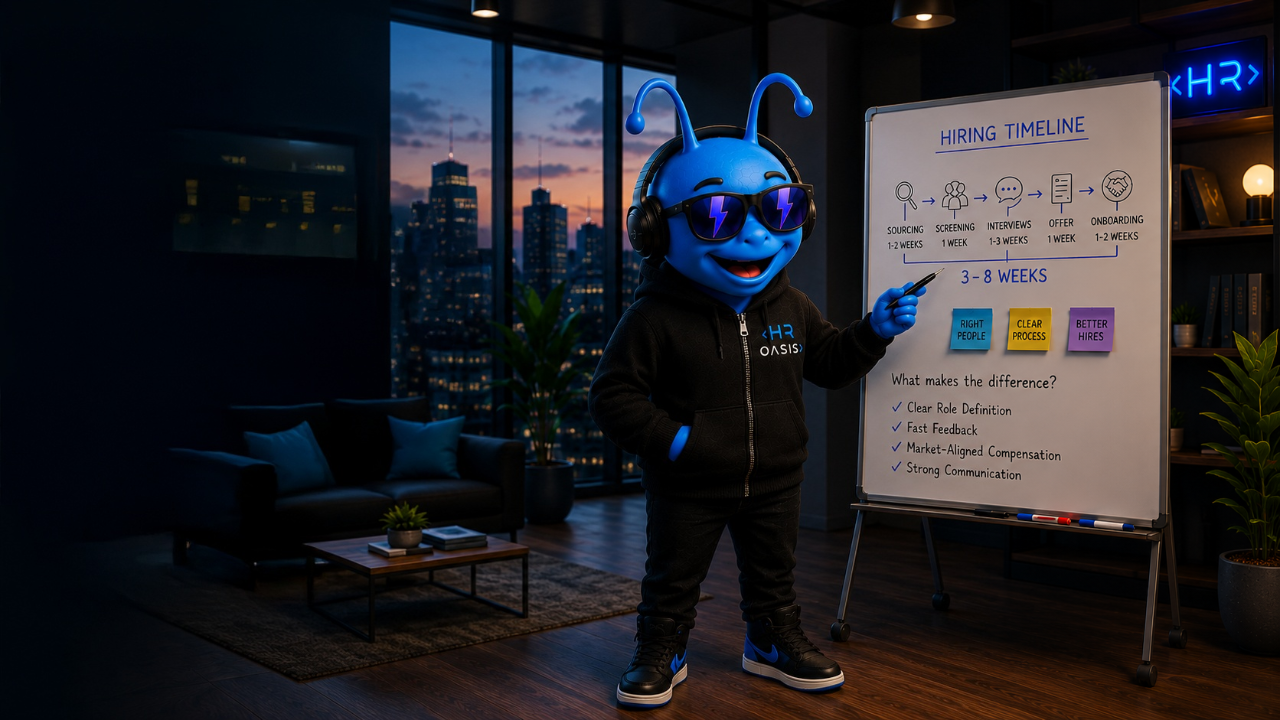
Hiring a software developer in Latin America takes between 3 and 8 weeks from first outreach to accepted offer, depending on the role, seniority level, country, and how the hiring process is structured on the company side.
That range is wide because the variables are real. A mid-level React developer in Colombia with good English and availability can be hired in three weeks with a well-run process. A senior DevOps engineer in Argentina with specific cloud certifications and a requirement for US timezone overlap can take six to eight weeks even when everything goes smoothly.
Here is a breakdown of what actually drives that timeline, what tends to slow things down, and what the best companies do to hire faster without lowering their bar.
Time-to-Hire by Seniority Level
Seniority is the single biggest variable in how long a search takes. The more senior the role, the smaller the active candidate pool and the more likely you are to be sourcing people who are currently employed and not actively looking.
Junior developers (0 to 2 years experience): 2 to 4 weeks. The active candidate pool is largest at this level. More people are looking, more are available quickly, and processes tend to move faster because the evaluation is more straightforward.
Mid-level developers (3 to 5 years experience): 3 to 5 weeks. Still a reasonable active pool, but strong mid-level candidates in in-demand stacks (Python, Node.js, React, cloud infrastructure) receive multiple approaches simultaneously. Speed of process matters here.
Senior developers (6-plus years experience): 4 to 8 weeks. Most strong senior developers in LATAM are employed and not actively looking. Reaching them requires proactive sourcing, the conversion rate from outreach to first conversation is lower, and they tend to move more deliberately before accepting an offer.
Tech leads and engineering managers: 6 to 12 weeks. The candidate pool for genuine technical leadership in Latin America is small. These searches require market mapping and direct headhunting rather than posting and waiting. Many of the best candidates for these roles are not visible in any database.
Time-to-Hire by Country
Latin America is not a single market. The depth of the candidate pool, the competitiveness for talent, and the typical notice periods all vary significantly by country.
Argentina has one of the deepest senior tech talent pools in the region, particularly in backend engineering, data, and infrastructure. English proficiency is high. Notice periods are typically two weeks. Time-to-hire for senior roles: 4 to 7 weeks.
Colombia has a fast-growing tech ecosystem concentrated in Bogotá and Medellín. Strong mid-level availability. Junior and mid-level roles can close in 3 to 4 weeks. Senior searches run 5 to 7 weeks depending on specialization.
Mexico has the largest developer population in LATAM (over 700,000 professionals). The pool is wide but competition is intense, particularly for engineers with US company experience. Time-to-hire: 4 to 6 weeks for mid-level, 6 to 9 weeks for senior.
Brazil has a large talent base but Portuguese as the primary language adds a filter for roles requiring strong English. São Paulo and Florianópolis have mature tech ecosystems. Time-to-hire: 4 to 7 weeks for mid-level, 6 to 10 weeks for senior.
Chile and Uruguay are smaller markets with strong talent quality and political stability. Searches in these countries often take a week or two longer simply due to pool size.
What Actually Slows Down a LATAM Hiring Process
In our experience running searches across Argentina, Colombia, Mexico, Brazil, and Chile, the delays rarely come from the candidate market. They almost always come from the client side.
Unclear role definition. When the hiring manager and the technical lead have different ideas about what the role requires, it surfaces mid-process. Candidates get rejected for reasons that don’t match the original brief. The search restarts with revised criteria. This alone can add two to four weeks.
Slow internal feedback. A candidate interviews on Monday. The recruiter follows up Thursday. The manager responds the following Tuesday. The candidate, who has been in two other processes the entire time, accepted an offer on Wednesday. This pattern is the most common reason good candidates are lost in LATAM searches.
Multi-layer approval processes. Searches that require sign-off from multiple stakeholders before moving a candidate forward move at the speed of the slowest stakeholder. In fast-moving tech talent markets, this is consistently the difference between closing the candidate you wanted and settling for your second choice.
Compensation misalignment. When the approved salary range is below what the market currently requires for the profile, the search takes longer by definition. Either the timeline extends while the company adjusts the range, or the company hires someone below the level they actually needed.
Notice periods. Standard notice periods in LATAM are two to four weeks. A candidate who accepts your offer on week four of the search won’t start for another two to four weeks after that. Planning for this is straightforward but many companies are surprised by it.
What the Fastest Searches Have in Common
Looking at searches that closed in three to four weeks versus those that took eight or more, the pattern on the fast ones is consistent.
The client had a clear, written brief before the search started. Not just a job description, but an understanding of what the role needs to accomplish, what the team looks like, and what has and hasn’t worked in similar hires before.
The decision-making structure was defined upfront. One person could say yes. The same person could move quickly when they saw the right candidate.
Feedback happened within 24 to 48 hours after each interview. Not a week later. Not “we’re discussing internally.” A clear next step within two days.
The compensation range was verified against current market data before the search opened. According to the HR Oasis Tech Salary Report 2026, senior backend developers in Argentina are currently earning between USD 3,000 and USD 4,500 per month for remote roles with international companies. Searches that open with ranges significantly below those benchmarks face headwinds from the first outreach.
And when a strong candidate appeared, the company moved to offer within a week of the final interview. The best candidates in LATAM are not waiting around. They have options, and the company that makes a clear, timely offer wins.
How HR Oasis Structures Searches to Minimize Time-to-Hire
At HR Oasis, we’ve run hundreds of searches across Latin America for companies in Argentina, the US, Europe, and broader LATAM. The patterns above are what we see consistently, and they inform how we structure every engagement.
Before a search opens, we align on role definition, decision-making structure, and compensation range. If any of those three are off, we say so before starting rather than discovering it in week five.
We source proactively rather than waiting for applications. For senior and specialized roles, that means direct outreach to people who are currently employed and not looking, through networks we’ve been building in these markets for over a decade.
We manage candidate communication throughout. When a candidate is in process with us, they know where they stand. That reduces drop-off and keeps good candidates engaged while internal decisions are being made.
And we give clients clear market feedback in real time. If a search is taking longer than it should, we tell you why and what would fix it, whether that’s adjusting the compensation, narrowing the criteria, or accelerating the internal process.
The average time-to-hire for searches we run is 4 to 5 weeks for mid-level roles and 6 to 8 weeks for senior and leadership positions. For companies running searches independently or through generalist agencies without established LATAM networks, those timelines are typically longer.
If you’re planning a hire in Argentina, Colombia, Mexico, or elsewhere in LATAM and want a realistic read on timeline and market conditions, we’re happy to give you that before you commit to anything.
📩 info@hroasis.com 🔗 hroasis.com